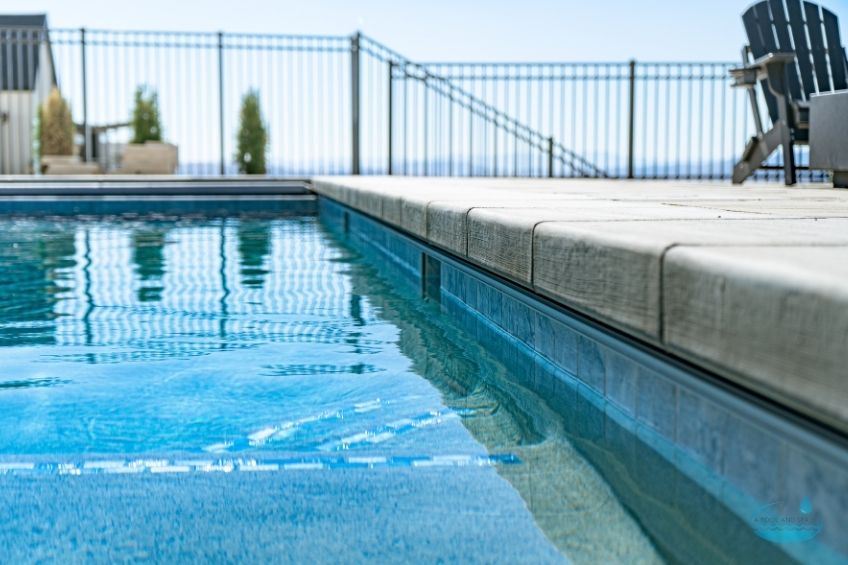
In swimming pool design, the most defining elements are often found along the edges. Coping frames the water, creates the transition to the surrounding deck, and shapes the visual language of the entire pool. Decorative concrete and stone veneer further refine the composition, turning structure into statement. For Utah homeowners working with A Pool and Spa, selecting between sand finished, broom finished, and bullnose coping is not simply a stylistic decision. It is an architectural choice that influences appearance, comfort, and long-term performance.
Coping is a surface that is seen and felt. Homeowners instinctively evaluate how it looks, but they live with how it feels underfoot. Sand finished coping offers a refined, smooth surface that feels seamless and visually restrained. Its clean texture complements sculptural pool forms and structured layouts.
Broom finished coping introduces a more textural surface. The subtle brushed finish provides additional traction, which many homeowners appreciate when moving between deck and water. This added grip can contribute to confidence and comfort during everyday use. Both finishes maintain defined edges, but their tactile differences influence how the pool environment is experienced barefoot.
In Utah’s climate, surface selection also matters during warmer months. Textural finishes can affect how heat is retained or dispersed throughout the day. When these elements are evaluated early in the design process, the result is a pool edge that feels intentional in both look and livability.
Bullnose coping changes the conversation from surface texture to profile. Its rounded edge creates a softer, sculptural perimeter that gently transitions from deck to water. Visually, this curved detail introduces movement and fluidity along the waterline.
The rounded profile also enhances comfort when sitting along the pool’s edge. It eliminates sharp definition and creates a seamless interaction between the swimmer and the structure. For homeowners seeking a design that feels more relaxed or traditionally refined, bullnose coping can add warmth without sacrificing architectural integrity.
Coping works in concert with surrounding materials. Decorative concrete provides opportunities for coordinated color, subtle pattern, and complementary texture. When paired with sand or broom finishes, decorative concrete can reinforce the design’s overall rhythm.
Stone veneer introduces depth and dimensional contrast. Whether used on raised features or vertical elements, it adds visual weight and material richness. Together, coping, decorative concrete, and stone veneer create a layered composition that feels cohesive rather than assembled.
Beyond aesthetics and comfort, coping finishes must perform. Utah’s freeze-thaw cycles demand materials and finishes that hold up under seasonal expansion and contraction. Selecting the right surface treatment and profile contributes not only to visual clarity but also to durability.
At A Pool and Spa, coping and material selections are considered within the full architectural design strategy. Texture, profile, climate, and surrounding finishes are evaluated as connected decisions. The result is a swimming pool that feels seamless underfoot, visually refined from every angle, and durable enough for Utah’s changing seasons.
Choosing between sand finished, broom finished, and bullnose coping is ultimately about shaping how the pool looks, feels, and performs over time. With thoughtful design and local expertise, the finished pool becomes a cohesive architectural statement that enhances the entire outdoor living environment.